You walk into the kitchen late at night, and it’s completely silent—except for the loud, continuous hum of your refrigerator.
Under normal circumstances, your fridge’s compressor should cycle on and off throughout the day to maintain a safe temperature. If it sounds like it’s running a marathon that never ends, it’s working overtime. Not only is this driving up your monthly energy bill, but it’s a clear warning sign that a critical component is failing.
Here is a breakdown of why your refrigerator won’t take a break, from the simple fixes to the serious mechanical issues.
1. The “Easy Fix” Culprits
Before you panic, check the basics. Sometimes, a constantly running fridge is just crying out for a little housekeeping.
Dirty Condenser Coils: These coils (usually located at the bottom or back of the unit) release the heat from inside the fridge. If they are caked in pet hair and dust, the fridge has to work twice as hard. Grab a vacuum attachment and carefully clean them off.
Worn Door Gaskets: If the rubber seal around your door is cracked or loose, cold air is constantly escaping into your kitchen. Close the door on a dollar bill; if you can pull it out easily without resistance, it’s time to replace the seal.
2. The Defrost System Failure
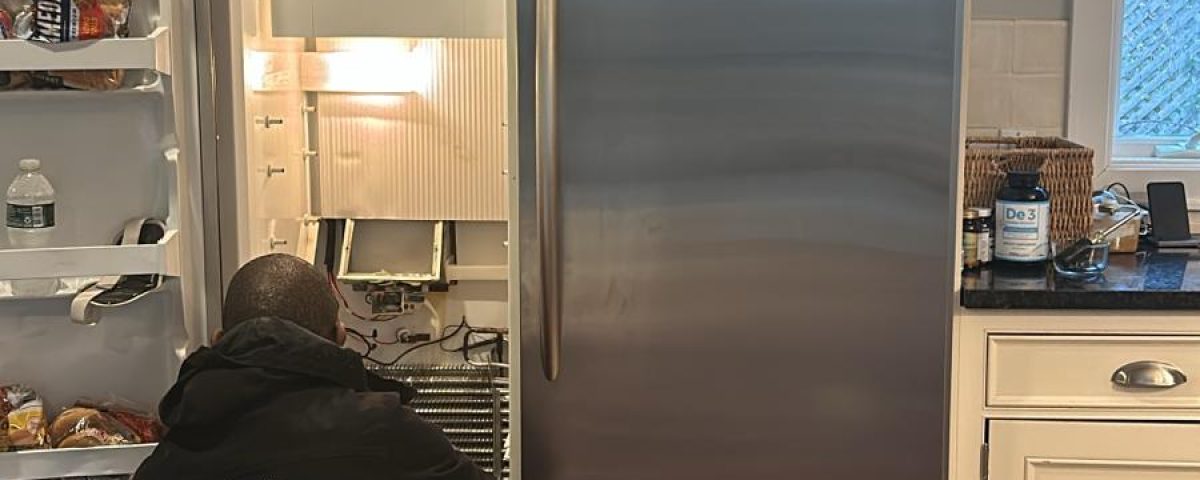
Modern refrigerators have automatic defrost cycles. If the defrost heater or thermostat fails, frost will build up over the evaporator coils, essentially choking the fridge. The compressor will then run non-stop trying to push cold air through a wall of solid ice. This requires a professional diagnosis and parts replacement.
3. The Big One: Sealed System and Compressor Issues
If your coils are clean, the doors are sealed tight, and the fridge is still running constantly (but the inside feels a little too warm), you are likely looking at a sealed system failure.
The sealed system is the “heart” of your refrigerator, containing the compressor, evaporator, condenser, and the chemical refrigerant (Freon) that does the actual cooling.
A failing compressor struggles to circulate the refrigerant.
A micro-leak means the system doesn’t have enough pressure to cool the air, forcing the motor to run continuously to compensate.
Why You Need a Specialist
Working on a sealed system is not a DIY job. It requires specialized EPA licensing, welding tools, and a deep understanding of refrigerant pressures. Most general handymen, and even many basic appliance repairmen, will walk away from a sealed system issue.
This is where true expertise matters. As factory-authorized specialists, we handle complex sealed system and compressor repairs that others won’t touch. We diagnose the pressure issue, manage the manufacturer warranty paperwork, and perform the high-level technical work required to save your high-end appliance.
If your refrigerator is working overtime, don’t wait for it to fail completely with a fridge full of groceries. Reach out to our licensed and insured team for expert, transparent service.